
The Sea Icon: A Centenary Tribute to Vice Admiral M.P. Awati
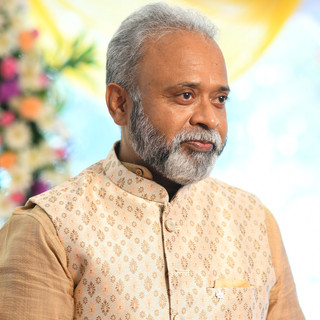
Imagine a chilly dawn in the quiet village of Vinchurni at 4:30 AM. The morning mist still hangs heavy over the countryside as a car's headlamps pierce the darkness. Getting into the seat is an elderly gentleman in his late eighties. Dressed in an immaculately pressed suit, he sits perfectly upright, embarking on the long drive to Pune to catch the Deccan Queen—a connection he famously, not even once, failed to catch on time. To any ordinary observer, he might seem like a retired professor.
But this was Vice Admiral Manohar Prahlad Awati, PVSM, Vir Chakra—submarine hunter of the 1971 War, former Commandant of the National Defence Academy, and the legendary "Father of Indian Ocean Circumnavigation". He was the pioneer who single-handedly envisioned and tracked the historic solo voyages of Indian sailors like Dilip Donde and Abhilash Tomy.
Today, September 7, 2026, marks the start of his centenary birth anniversary year. Within the Indian Navy, Admiral Awati is a towering titan. Yet, to the wider public, this elegant sea icon remains largely unsung. This centenary year is our collective opportunity to change that. As we embark on this milestone, I am just hoping this centenary year would be a series of tributes to the vision led by M.P. Awati, not nostalgia, which is the true form of tribute. To honor him is not to look back with warm regret, but to look forward with an active, guiding compass.

A Bond Beyond the Blue
For me, this tribute is deeply personal. For forty-two months, I had the privilege of working under the Admiral's direct wings, nurturing his precious child, the Maritime History Society (MHS). Our relationship quickly transcended professional lines, mirroring the profound guidance of my own father, Odakkal Master of Kondotty. In a beautiful twist of fate, these two iconic parental figures were born just twenty days apart, providing the near-identical cover that enabled me to blossom as a voyager of learning.
I can still feel the warmth of early July 2018 when I handed him the first-ever copy of Sagardhara, our newly launched news magazine. His sagacity and vision acted as a powerful catalyst that transformed me from a student of the sea into a published historian and director. Under his guidance, we moved with a new tack—driving towards systems, in-house research scholarship, digital presence, and reaching out directly to schools and the general public. His contributions to our growth were immense; his vision was to rescue maritime history from closed shelves and put it in the hands of the public. As Patron Emeritus of MHS, he had tirelessly guided our transition into an active research engine, personally navigating us through decades of pending statutory compliances and building a robust in-house research vision. Looking at Sagardhara—the stream of the sea his eyes welled with tears. "Johnny, you have transformed my vision into reality!" he said. Not long after, he spoke of his final voyage, requesting we remember him with a simple white carnation rather than a red one. On November 3, 2018, the Grand Sire set sail into the eternal seas.
To truly honor him today is to breathe life into his enduring dream of a "sea-minded" nation. When we documented our seafaring roots in Where Heritage Awakens Maritime Consciousness!, we were capturing his belief that a nation's future is shaped by its oceans. In Legend & Legacy : 45 Years of Maritime History Society, we tracked how a seed planted with a "princely" sum of INR 1,000 grew into an academic beacon. His legacy is an active, living compass, directing us to explore ancient navigation in Climatology & Marine Navigation a Rich Heritage! and preserve material culture as outlined in Museums Today!
Charting Your Own Course: Lessons for Young Scholars and High Schoolers
If I could gather today’s high schoolers and young scholars in one room, I would tell them that Admiral Awati’s journey is a masterclass in living with purpose in a world obsessed with instant validation.
First, consider his "Quiet Second Act". Many achieve great heights and spend their retirement resting on their laurels. But the Admiral proved that your most enduring legacy is often built after your primary career ends. He spent forty post-retirement years on the grueling, non-glamorous task of institution building, showing that true leadership is about service that outlives the self.
Second, he demonstrated that humility and discipline are the same habit. That dawn train ride from Vinchurni was not a forced chore. Even in his late eighties, he chose to travel unassisted by ordinary passenger train to Pune just to attend an MHS Founders' Day. When a young sailor rushed to carry his bag, he politely refused, choosing to hire a local railway porter instead. He believed in supporting local livelihoods while keeping his own feet firmly on the ground.
Third, he taught us that we must actively construct our national memory. History does not preserve itself; we must decide what counts as "worth archiving". He inspired me to write Timeless Wake, which became Timeless Tales of Naval Narratives, and supported our work uncovering the 1946 Royal Indian Navy Strike in Unwrapping an Uprising that hastened Indian Independence. For a young scholar, his life challenges you to look at the horizon, find the unsung stories, and build the intellectual infrastructure your country needs.
Answering the Shikwa: Steering the Ship Forward
In my deeply reflective moments, I often think of the quiet plea—the Shikwa, or complaint that I penned in Shikwa-E-Sagardhara : Sail on Sea Icon. I asked why we, who were chosen to ride the rising tide of maritime glory, are sometimes left to fade into the ebb tide of public memory.
The answer to that complaint does not lie in passive sorrow, but in how we steer our sails today. To preserve the wonderful voyage of Admiral Awati, our nation must integrate this rich seafaring consciousness into our national identity. We do this by actively preserving our tangible heritage, such as translating the ancient navigational logs of Kutchi boatmen in the Malam-Ni-Pothi, and bringing these stories into our classrooms.
Our tribute must be active, echoing in the sails of modern circumnavigators who continue to challenge the global oceans. The Admiral’s celestial telescope is watching us. Let us fill our sails with his indomitable spirit, turn his sea-minded vision into our daily mission, and carry his legacy proudly into the next century.
विरासत जगाये समुद्री चेतना! May Heritage Awaken our Maritime Consciousness!


Comments