
Scholar in South Block : Stellar Season Ahead
Updated: Jun 4
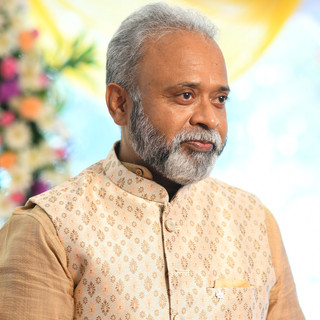
The morning of May 31, 2026, carried a rare sense of emotion within the imposing corridors of South Block. Beneath the ceremonial precision of the guard of honour and the formal transfer of command from Admiral Dinesh Tripathi, PVSM, AVSM, NM India witnessed the appointment of its 27th Chief of the Naval Staff, Admiral Krishna Swaminathan, PVSM, AVSM, VSM. For the nation, it was the rise of a distinguished naval leader to the highest office of the Indian Navy. To some of us as the naval cohort of NDA’s 70th course and equivalent - the “70th Elites,” this was the proud ascent of a coursemate, a shipmate, a neighbour, and above all, a very dear friend.
Special moments arrive in life when achievement transcends rank and designation. Watching “Krish” take charge of the Indian Navy was one such point when time stood still. Carrying the four-star shoulder insignia stood someone many of us had known not just as an institution, but as a warm and grounded human being. Long before South Block, before command appointments and strategic responsibilities, there were countless seasons of discipline, resilience, and camaraderie together. Those bonds forged in the demanding routines of the Naval and National operations across the waves.

Some memories remain especially vivid. Serving alongside him aboard INS Viraat during 1995-96, sharing conversations as next-door neighbours in naval accommodation, and witnessing the quiet dignity with which he carried every responsibility, one could always sense that he was destined for extraordinary things. Yet what stayed remarkable throughout his journey was his humility. Even as he rose through responsibility and rank, he remained approachable, thoughtful, and deeply connected to his circle of friends and colleagues.
I still remember helping pin on his first three-star rank as Vice Admiral. It was not a grand public moment, but a quiet home and hearth moment that reflected the person he truly is. Looking at him now as the Chief of the Naval Staff creates a powerful contrast, not simply because the man has remained unchanged, but since the voyage has been so extraordinary.
What has always distinguished Admiral Krishna Swaminathan is the rare balance he embodies between intellectual depth and operational excellence. In many ways, he represents the ideal of the scholar-warrior. Long before the Indian Navy institutionalised advanced doctoral pathways at the Naval War College, he was already pushing those boundaries. I look back with a sense of pride and nostalgia to our shared doctoral journey in 2016, when “Krish”, Vice Admiral Sanjay Jasjit Singh (Retd) and I navigated our doctoral journey under the guidance of Professor Uttara Sahasrabudhe at University of Mumbai. Even then, his ability to combine rigorous scholarship with the demands of active naval service stood out. That achievement alone would have marked him as exceptional, but it was only one part of an extraordinary academic journey.
This intellectual rigor was never pursued for prestige alone. It shaped his understanding of strategy, technology, and the evolving character of warfare. As a Communication and Electronic Warfare specialist, he developed a deep appreciation for how future conflicts would increasingly be shaped not only by firepower at sea, but also by information dominance, cyber capabilities, and electronic battles fought invisibly across networks and frequencies.
I was reminded of this only recently when I met him in his office to present my book, Wide Wild World. The interaction felt less like a formal courtesy meeting and more like a conversation with someone who genuinely grasps the complexity of the strategic world we inhabit today. His insights reflected not only operational experience, but also a scholar’s instinct to understand the larger geopolitical currents shaping our times. Yet for all his academic brilliance, Admiral Swaminathan’s leadership was ultimately forged at sea.
Since his commissioning into the Indian Navy on July 1, 1987, he has commanded five frontline warships across multiple classes and operational roles. From the fast attack missile vessels INS Vidyut and INS Vinash to the missile corvette INS Kulish and the guided missile destroyer INS Mysore, his command experience reflects both diversity and depth. Among these appointments, perhaps none carried greater symbolic and operational significance than serving as the second Commanding Officer of India’s aircraft carrier INS Vikramaditya. Commanding a carrier is not simply about seamanship or tactics; it requires the ability to integrate men, machines, aviation operations, and national strategy into a single coherent fighting system.
As he advanced through the flag ranks, his influence extended beyond operational command into institution building. As Chief Staff Officer (Training) at Southern Naval Command and later as Flag Officer Sea Training, he shaped the standards by which the Indian Navy prepares itself for combat. He also played an instrumental role in establishing the Indian Navy Safety Team, reinforcing operational safety and professional accountability across the force.
His subsequent appointments reflected the trust placed in him at the highest levels. Commanding the Western Fleet, often called the “Sword Arm” of the Navy, placed him at the centre of India’s frontline maritime posture. His tenure as Vice Chief of the Naval Staff and later as Flag Officer Commanding-in-Chief of the Western Naval Command further demonstrated his ability to lead during a period of rapidly evolving maritime competition and strategic uncertainty.
His decorations, including the Param Vishisht Seva Medal, Ati Vishisht Seva Medal, and Vishisht Seva Medal, speak to decades of distinguished service. Yet those who know him personally understand that the medals tell only part of the story. The greater measure of the man lies in his integrity, consistency, and unwavering commitment to both institution and people.
The maritime landscape confronting India today is vastly different from the one that existed when we first wore uniforms together. The Indian Ocean has become increasingly contested. The boundaries between conventional warfare, cyber operations, electronic warfare, and geopolitical competition are blurring rapidly. In such an environment, the Indian Navy requires a leader capable not only of commanding fleets, but also of understanding the intellectual and technological transformations reshaping maritime power itself. In Admiral Krishna Swaminathan, India has found precisely such a leader.
For those of us from the 70th course, his appointment feels like a shared milestone. It is the story of someone profoundly deserving reaching the very summit of service through merit, intellect, professionalism, and character. It is also a reminder of the enduring bonds forged in youth, when no one could fully imagine where life would lead.
A brief mention is due to the smiling and strong presence of an elegant lady - Laila, and the effervescence of two Gen-Z charmers - Samara and Aria. It's the heart of a strong home and family robustness that strengthens the sinews of the arm at the helm of a powerful Indian Navy.
It is a multi-decade progress from the environs of Sainik School, Bijapur to the command corridors of South Block. Even at the cost of repetition, to many, he is Admiral Krishna Swaminathan, Chief of the Naval Staff. To us, he will always remain Krish : the scholar, the singer, the steady friend. As he steers the Indian Navy at a defining moment in India’s maritime rise, we offer him our admiration, our pride, and our warmest wishes.
Fair winds and following seas, Admiral.
Sam Noh Varunah!


Comments