
Who Is My Neighbour? A Question That Travelled from a Lecture Hall to a Classroom
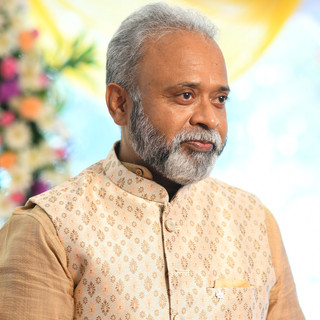
In 2017, I stood before a hall full of young minds at IIT Gandhinagar to speak about the Indian Navy’s role in the First and Second World Wars. The lecture was meant to be historical, but midway through, I chose to pause and ask a simple question: “Who are my neighbours as India?” Hands went up confidently, answering Pakistan, China, a few even added Sri Lanka and the Maldives. All correct, yet they revealed something deeper. Almost every answer was shaped by the idea of boundaries in the traditional sense. So I pushed the question further: “What if I say Chile is our neighbour? Or Argentina? Or even Japan?” The room fell silent. Some laughed. Some looked puzzled. Eventually, I asked, “What defines a neighbour?” and a reply was echoed in the speed of light: “a boundary line”. That response stayed with me. I then spoke about maritime zones, and how oceans link nations as powerfully as land borders do. That day, the idea I wanted to leave with the students was simple: neighbourhood is not just about lines on land; it is also about shared waters, routes, histories, and responsibilities.
Little did I know then that this question, asked casually in a lecture hall, would one day find its way into a Grade 7 part 2 NCERT textbook.

Geography as a Lived Experience
My relationship with geography has never been confined to textbooks. As a naval officer and navigator, maps were my constant companions. Cartography was not theory; it was survival. Understanding coastlines, currents, ports, distances, and chokepoints was part of daily life. Geography, for me, was something you lived, not something you memorised. That lived experience shaped the framework of the NCERT chapter “India and Her Neighbours.” From the outset, I felt strongly that students should not inherit a narrow idea of neighbourhood, one limited only to land borders, because that is not how India exists in the world.
India has over 11,000 kilometres of coastline, sitting at the crossroads of Africa, West Asia, Central Asia, South Asia, Southeast Asia, and even East Asia and Oceania if we stretch the perspective. Historically and strategically, India has always been a maritime nation. This chapter therefore begins by reframing the neighbourhood. The full chapter may be accessed here: https://ncert.nic.in/textbook/pdf/gees202.pdf
From Immediate to Extended Neighbours
Yes, India’s land-based neighbours matter deeply. However, for a long time, India’s understanding of its neighbourhood was shaped largely by land borders. This perspective is not incorrect, but it is incomplete. India shares land boundaries with Pakistan, Afghanistan, China’s region of Tibet, Nepal, Bhutan, Bangladesh, and Myanmar. These borders pass through deserts, plains, forests, mountains, river valleys, and marshes, forming a diverse and complex landscape. These neighbours have shaped India’s history, security concerns, cultural exchanges, and political realities in profound ways.
However, India is also surrounded by the sea on three sides. With a long peninsular coastline and access to major sea routes, India occupies a unique maritime position. Her peninsular shape extends deep into the Indian Ocean, giving her access to some of the most important sea routes in the world. This makes Sri Lanka and the Maldives immediate neighbours across the waters. When viewed from a higher perspective, India’s maritime neighbourhood expands further to include countries such as Iran, Oman, Thailand, Malaysia, Singapore, and Indonesia. These connections are not recent. They are rooted in centuries of trade, pilgrimage, cultural exchange, and shared history.
For centuries, Indian traders sailed to Suvarṇabhūmi and Suvarṇadvīpa. Buddhist monks crossed seas carrying ideas, not armies. Ports became meeting points of language, food, faith, and culture. The ocean did not divide; it connected. This is why the chapter introduces students to the idea of a maritime neighbour, a country connected not by land, but by shared seas. It explains why the Indian Ocean, which carries a majority of the world’s oil and trade, matters not just to strategists, but to students trying to understand their place in the world.
Writing the Chapter
The core framework of the chapter emerged from these ideas, but its transformation into a student-friendly narrative was the result of collective effort. The research and writing were undertaken by the JOI team consisting of Ms. Vivaksha Vats, Ms. Supriya Mishra, and Ms. Kashmira Juwatkar, who worked carefully to translate strategic geography into language that a middle school student could relate to. Their challenge was not merely to inform, but to engage curiosity without overwhelming.
We also benefited immensely from the guidance and feedback of the NCERT team, particularly Prof. Michel Danino ji and Ms. Suparna Diwakar ji. Their insights helped sharpen clarity, balance tone, and ensure the chapter remained pedagogically sound while staying true to historical and geographical realities.
I remain deeply grateful for that collaborative spirit.

Neighbours, Cooperation, and Reality
While the chapter presents India’s relationships with her neighbours, it does not shy away from reality. India’s ties with some neighbours, particularly Pakistan and China, have been marked by conflict, tension, and unresolved disputes. Wars, border issues, and terrorism have disrupted normal relations and created long-standing challenges. At the same time, the chapter shows students another truth: India has repeatedly acted as a facilitator rather than a disruptor. From humanitarian assistance and disaster relief to development partnerships, cultural exchanges, and regional connectivity projects, India’s engagement has often been guided by cooperation.
When a Chapter becomes a Conversation
Since its release, “India and Her Neighbours” has sparked wide public discussion. Several national and regional media outlets have examined the chapter’s content, approach, and relevance, reflecting the wider interest in how India’s relationships with her neighbours are presented to students. This attention reminds us that what children learn in classrooms shapes how nations think tomorrow.
Why This Matters
A similar spirit guided us earlier in creating our recently launched book, “Wide Wild World: Divergent Hues of a Chaotic Globe”, the belief that young learners deserve a truthful, expansive understanding of geography, history, and politics. Not geography as static maps, but geography as a lived connection. The book is available here: https://www.amazon.in/dp/9349934515
If this conversation on neighbourhoods and global thinking resonates with you, explore our Kruu Webinar from HCL Jigsaw 5.0, which inspired over 10,000 high school learners: https://youtu.be/DjR-MiYqrsU. For Academic Mentoring and Tutoring support in IBDP and IGCSE, connect with us at https://www.johnsonodakkal.com/allprograms. You may also dive into our recent podcast discussing themes from India and her Neighbours here: https://www.youtube.com/live/qfN766PZnXc. Let us continue expanding how we understand our world.


Comments